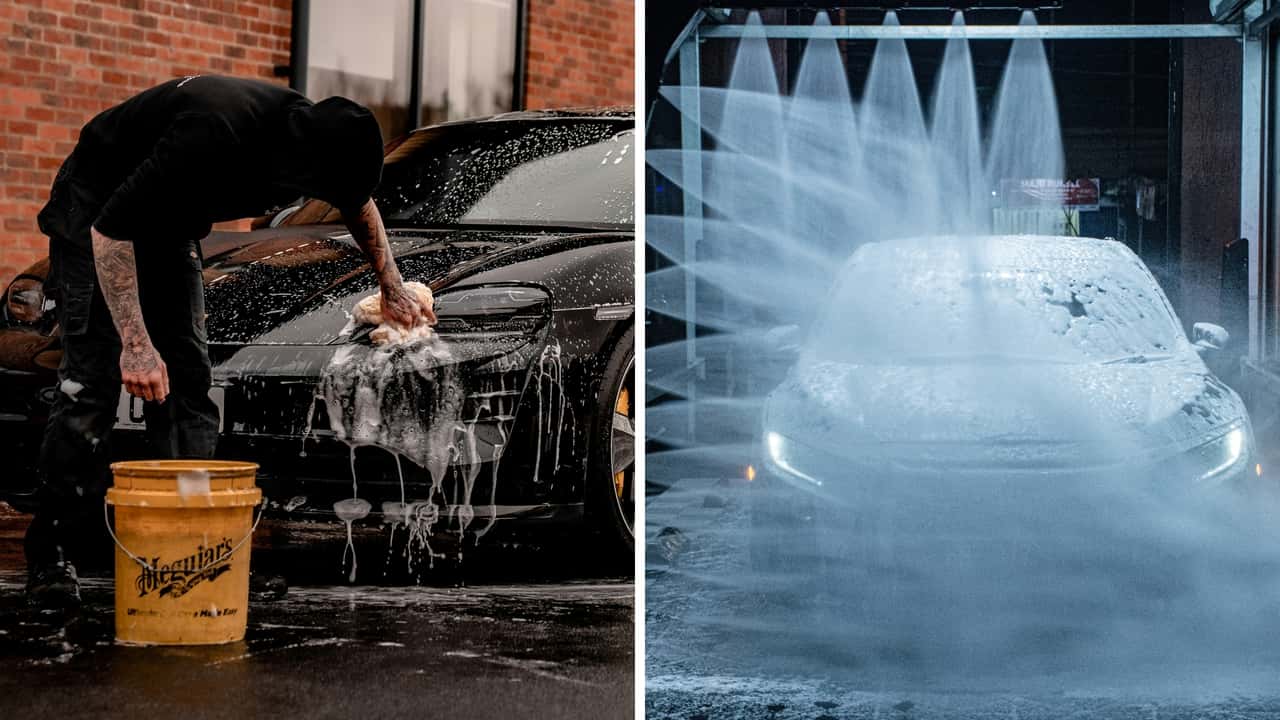
“And you paid for all of it.”
Automated car washes seem to offer exactly what busy drivers want: a clean car in about 10 minutes without lifting a finger, with no appointment needed and minimal human interaction.
A professional luxury-brand detailer behind a viral TikTok says that convenience may come with a hidden cost that negatively impacts your car’s resale value.
Creator APEX (@apexdetailin) makes his case that repeated trips through commercial washes can gradually wear away the very finish owners are trying to protect. Along the way, he mixes widely accepted detailing advice about swirl marks and paint care with broader claims that commercial car washes routinely reuse dirty rags, rush through vehicles, and quietly chip away at their value.
“Over time your paint fades, swirl marks build up and your car’s resale value drops—and you paid for all of it,” warns one of the slides in the clip that’s been viewed more than 7,400 times.
APEX presents the issue as an open-and-shut case. But the debate over automated car washes has existed for years and there’s lots of nuance and context that matters from both sides. Professional detailers, auto enthusiasts and the car wash industry generally agree that improper washing can cause fine scratches over time.
Where they differ is on how much blame belongs with modern commercial car washes versus other parts of a vehicle’s life. One of the detailer’s strongest points centers on swirl marks, which are faint, circular scratches that become most noticeable when sunlight hits a vehicle’s paint.
According to AAA, those marks are often created when dirt or other abrasive particles are dragged across a vehicle’s finish during washing or drying. AAA recommends choosing facilities that use modern soft-cloth equipment instead of older, more abrasive brush systems.
For those who opt to wash their vehicles by hand, drivers are warned against taking shortcuts and using dirty wash mitts or towels that can trap grit and scratch paint. That’s because repeated abrasion from contaminated cleaning materials or overly aggressive washing techniques can gradually dull a vehicle’s finish.
Dark-colored vehicles tend to show those imperfections early on, while lighter paint often hides them until they become more severe.
APEX’s slideshow also paints automated car washes with a broad brush that treats all automated car wash businesses as identical. Modern soft-cloth systems use gentler fabric designed to reduce friction compared with the hard brushes used in many older washes, while touchless washes rely on high-pressure water and detergents rather than physical contact with the paint.
The car wash industry has also argued that swirl marks can develop from a variety of sources, including improper hand washing, dealership preparation, environmental contamination and everyday driving. Their argument is that we shouldn’t be in a hurry to pin every scratch on a trip through an automated wash.
APEX also connects cosmetic damage to the universally important factor of a car’s resale value. Neither his slideshow nor the caption accompanying it cite research directly linking automated car washes to lower selling prices, it’s no great leap to understand that appearance plays a big role when dealerships and private buyers evaluate a used vehicle, with swirl marks, scratches and oxidation pulling the offer price ever downward.
The creator’s ultimate intent is delivering a pitch for high-end detailing services like his. He argues that the costly appearance flaws “build up wash after wash” quietly, until owners suddenly notice the damage in direct sunlight.
He closes with a reminder: “Your car is an investment. Treat it like one.” The value proposition of the extra cost and effort versus risking a slow accumulation of scuffs and swirl marks ultimately comes down to the owner.
For most drivers, a modern soft-cloth or touchless wash may be a perfect compromise between convenience and preserving the finish. But for owners of collector cars, luxury vehicles, or anything with fresh paint, careful hand washing and professional detailing may be preferred, to minimize the chance of damage.
In the end, the warning that automated car washes are quietly “destroying” every vehicle that passes through them feels to many as alarmist and exaggerated. They argue that what matters most is the type of wash being performed, and how pristine an owner wants their vehicle to remain over the long haul.
Motor1 reached out to the creator via direct message and comment on the clip. We’ll update this if they respond.
We want your opinion!
What would you like to see on Motor1.com?
– The Motor1.com Team