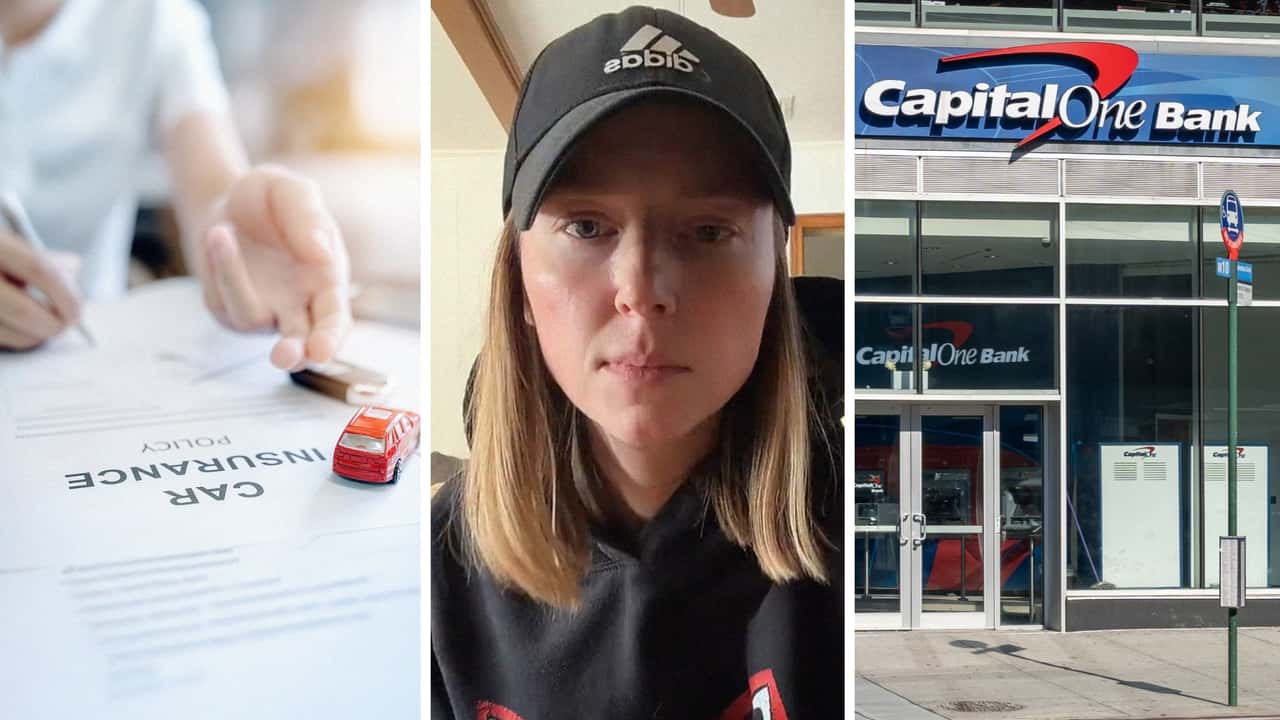
‘Capital One is a pain to deal with in all aspects.’
A land clearing contractor was driving to a job when a car hit his truck and pushed him into the semi ahead of him.
According to his wife’s account of the accident, the driver who caused it had no insurance. The truck owner’s own insurer wrote the truck off and mailed a check.
However, three months later, he signed and paid for a replacement truck he was not allowed to drive away.
The contractor’s wife, who posts on TikTok as breadcrumbs (@breadcrumbs659), told the story in detail in a seven-minute and 24-second video that has drawn more than 19,900 views.
The crash was on May 5, she says.
“A car hits him and ends up hitting a semi in front of him,” she says. The driver she says is at fault “did not have insurance.” She says State Farm declared the truck a total loss and, because it was financed, cut a check for the balance.
“Insurance mails us a check to pay off the truck,” she says. “Full payoff.”
The truck was financed through Capital One, and by her account, the payoff never landed. She sent the check by priority mail to the address the lender specified, she says, and it came back with a request for more identifying detail. She says she added it and sent it again.
“Put the account number, put the VIN number, put all of the things on the check,” she says. “Then they say no, and they mail it back saying, ‘Hey, you need to put other things on this check.’”
She puts the figure at $40,000.
She says her husband found a replacement truck in August. At the dealership, the finance check cut no ice.
“You’re delinquent in payments for this Dodge Ram,” she says the salesman told him, describing a truck that had been sitting in an insurer’s salvage yard since May. “They’re not delinquent, my dude. We’ve tried to send you the $40,000 check that you won’t take.”
He signed the paperwork and paid the deposit. Then, the owner of the dealership intervened, she says, because Capital One had by then filed for repossession.
“[The owner] is not comfortable releasing the truck after [my husband] already paid and signed for it,” she says. “[The old truck] in a junkyard. It’s been assessed by everybody you wanted it to be assessed by. You have the police report.”
She says the problems arose from the time interval between the truck being declared a total loss and the loan being closed out, a widespread problem that regulators have begun to look harder at.
The Consumer Financial Protection Bureau devoted a special edition of its Supervisory Highlights to auto finance in autumn 2024. Examiners found servicers that “continued to collect monthly payments from consumers for months after a total loss event” and spelled out what that does to a household: “During this period consumers may be forced to make multiple car payments, one for their totaled vehicle and another for a new vehicle.”
The report also spells out the trap for anyone who decides the wreck settles the matter. “If consumers ceased making these payments servicers would furnish negative credit reporting information,” it says.
On repossession, the same report found servicers acting unfairly when they “erroneously repossessed consumers’ vehicles” after “consumers had made payments or obtained extensions that should have prevented repossessions.”
Announcing the findings on October 7, 2024, the agency added that “lenders were knowingly placing inaccurate loan information on thousands of consumers’ credit reports.”
In a short comment thread, the most popular reply proffers a neat solution. “The first time they sent it back I would’ve just cashed the check and paid it myself,” wrote sofaspuddees.trinatot. “Can’t reject my bank payment going directly to the loan.”
Waste.dad had the same idea: “Why can’t you cash the check and pay it with your account?”
Other comments included expressions of empathy from people who had been through a similar process. “You have to keep paying your monthly payment until the vehicle is paid off,” wrote agilstrap1, who added that the insurer “should have sent the check directly to Capital One” rather than to the customer.
Bethhaleyjeffers described the same thing from experience: “I had to make payments on the totaled truck until the insurance completed their part. I made two or three payments while waiting for the money from insurance,” they wrote.
Some people had stories of less fraught payouts. “Husband’s truck was financed through Capital One and was totaled,” wrote kayla.flowers8. “Other person’s insurance paid it off and sent check directly to them. Was a very smooth process.”
Breadcrumbs says she plans to sue. “I need to know how to sue the hell out of Capital One,” she says. dffydck made a simpler suggestion in the comments section: “Dispute it with the credit bureau with all the evidence that they won’t accept the check.”
The Federal Trade Commission advises that “both the credit bureau and the business that supplied the information to a credit bureau have to correct information that’s wrong or incomplete in your report,” adding, “And they have to do it for free.”
The bureau then has 30 days to investigate, and the agency tells consumers to dispute in writing, attach the documents, and keep a record of everything sent.
From what breadcrumbs says, her paperwork is comprehensive: a police report, an insurer’s total loss determination, and a returned check with a postmark.
Motor1 reached out to breadcrumbs via TikTok direct message and to Capital One by email for comment. We’ll be sure to update this if any of them respond.
We want your opinion!
What would you like to see on Motor1.com?
– The Motor1.com Team