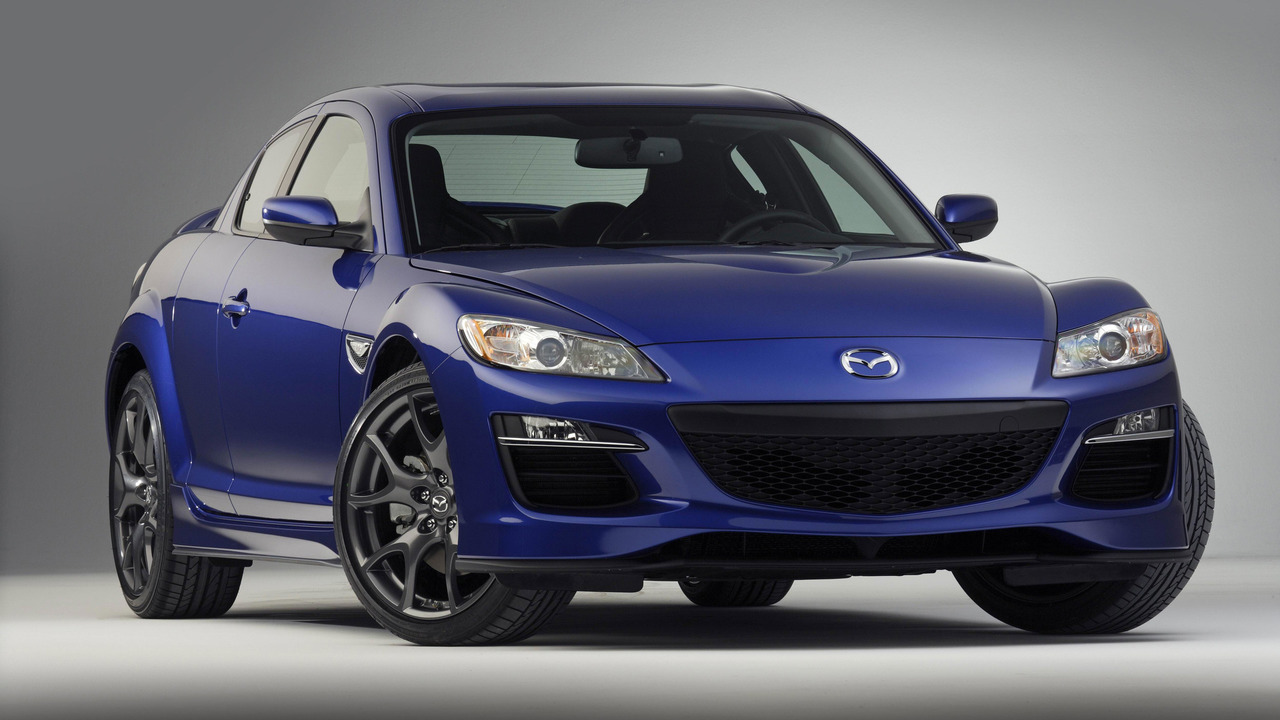
Mazda’s next rotary application could drive the wheels instead of only charging a battery, marking a major shift from the MX-30 R-EV setup.
Mazda’s rotary engine might finally get back to doing what it did for decades: turning the wheels. Moritz Oswald, product-planning manager at Mazda Motor Europe, says the company’s next rotary application will not just sit under the hood charging a battery.
That’s a real shift from the setup in the MX-30 R-EV, Mazda‘s only current rotary-powered vehicle. Oswald hasn’t named a car or a date. But he’s given enough detail to separate genuine plans from wishful thinking.
Mazda Rotary Engine
Oswald told Car Magazine that Mazda keeps circling back to a rotary configuration where the engine actually contributes to propulsion, not just acting as an electricity generator. He stopped short of confirming a production timeline or naming the model that would get it.
According to Oswald, the rotary’s appeal has never been about outright efficiency. “The reason why people love the rotary is because of the revving, because of the sound, because of the vibration,” he said, treating the engine as an experience rather than a spec sheet.
A hybrid setup seems to be the leading approach for making that experience emissions-legal. Oswald described a system that starts electric and lets the rotary join in later. “In theory, there is a lot of opportunities. If you have a battery and you can control that, the car will always turn on in EV mode and then the rotary heightens up.”
He completely ruled out one alternative and will not pair it with a continuously variable transmission. “CVTs come with quite some disadvantages in terms of gear shifts and driver engagement. The real connection is lost,” Oswald said. That points toward a setup built to preserve the rotary sports car dream.
2023 Mazda MX-30 e-Skyactiv R-EV
The distinction matters because the MX-30 R-EV‘s rotary engine never connects to the wheels directly. It spins a generator that feeds the battery. The electric motor alone handles propulsion in a setup closer to a small onboard power plant than a traditional engine.
Mazda has stuck with the rotary format since the 1965 Cosmo through the last RX-8 in 2012. It’s currently the only manufacturer still committed to the design. That history is why Oswald calls the internal enthusiasm real rather than nostalgic marketing.
“The thing is, at Mazda, and that is why I really like working at Mazda, we have a lot of enthusiasts,” Oswald said, echoing what Mazda’s own staff have reportedly pushed for internally.
Engineering work backs up the talk. A 2023 patent filing covers a rotary-specific exhaust gas recirculation system. It addresses a long-standing weakness where older rotary designs burned extra fuel just to cool the housing and control combustion temperatures, driving up emissions in the process. That is the kind of improvement a direct-drive rotary would need to meet current emissions rules. It lines up with the efficiency patent Mazda filed to make the engine cleaner without gutting the character that made it worth saving.
For now, Mazda is talking about hybrids and patents rather than a new RX-badged coupe. But a rotary that can drive the wheels again, backed by fresh engineering work and internal enthusiasm, keeps the door open for a real performance application.
More From Mazda:
Source:
We want your opinion!
What would you like to see on Motor1.com?
– The Motor1.com Team