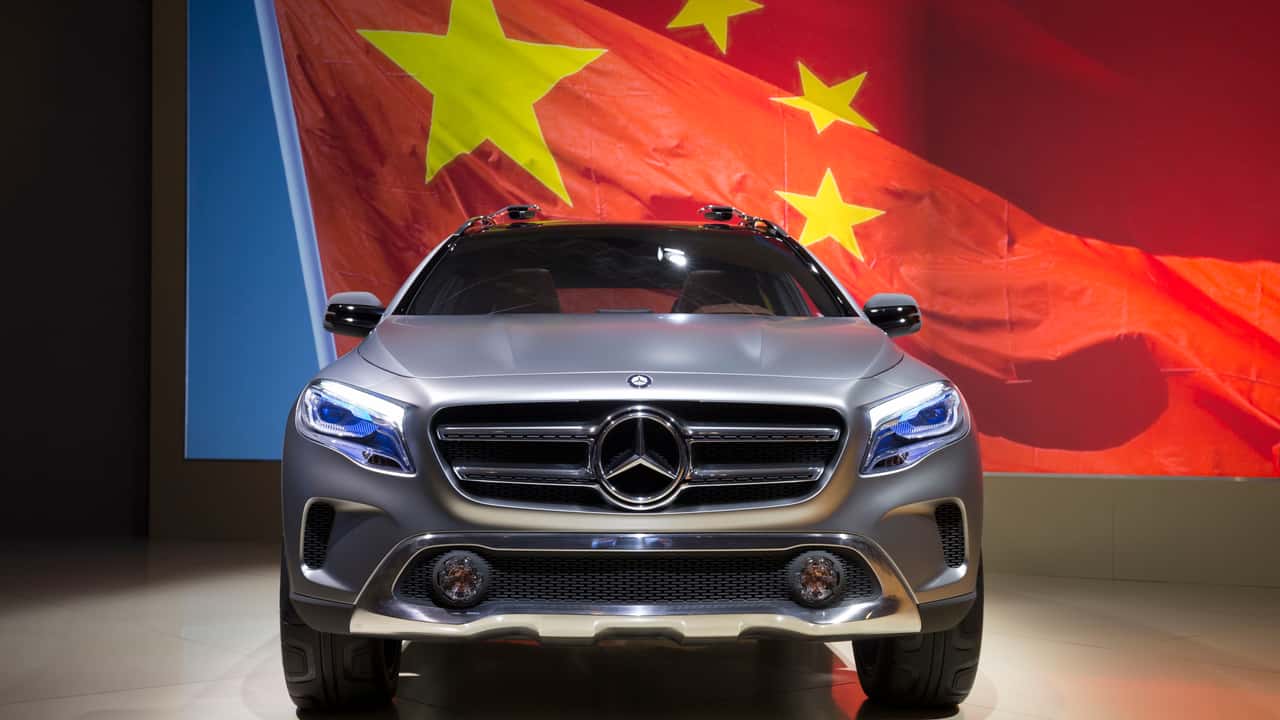
Mercedes-Benz faces questions over nearly 20 percent Chinese ownership as senators debate a 15 percent cutoff and possible waivers.
Mercedes-Benz builds sport utility vehicles in Alabama for markets around the world and runs a van plant in South Carolina. Chinese groups, including Geely and Beijing Automotive, together own nearly 20 percent of the German company. That combination of US factories and Chinese shareholders turned a bill aimed at Chinese automakers into a direct threat to Mercedes’s American business.
The Senate Commerce Committee’s proposal would bar any automaker with more than 15 percent Chinese ownership from selling vehicles in the United States. With its stake sitting just under 20 percent, Mercedes landed squarely in the bill’s path and quickly became the most prominent test case.
Mercedes-Benz G 580 at Auto China 2024
The legislation was written to keep Chinese automakers and their technology off American roads, not to punish a German company with about three decades of US manufacturing history. But the ownership math did not discriminate.
Once the 15 percent threshold became public, it was obvious Mercedes sat on the wrong side of it.
Senator Bernie Moreno, the bill’s lead sponsor, acknowledged the problem directly. Moreno told Reuters that lawmakers were negotiating changes specifically so the bill would not ban Mercedes-Benz from the US market.
Mercedes-Benz CEO Ola Källenius has pushed back on the idea that Chinese ownership gives Beijing any real influence over the company. “They are by no means acting in consort, nor are they representative on the board,” Källenius said, describing the stakes as financial and passive rather than coordinated.
Senator Ted Cruz offered a different read on the standoff. He claimed General Motors was lobbying for the ownership threshold to push a rival out of the American market. That accusation has not been independently verified. It shows how fractured the politics around this bill have become.
Hubertus Troska presents new C-Class long wheelbase at Auto China 2014
Mercedes is lobbying to raise the ownership cap from 15 percent to 25 percent, which would clear the company without forcing any restructuring of its shareholder base. Moreno has floated a separate option: waivers that would let Mercedes keep operating while regulators sort out compliance details.
Not every senator is on board with carving out exceptions. Rand Paul argued the 15 percent line could sweep in Mercedes-Benz alongside smaller brands like Aston Martin and Lotus, and he wants the bill’s scope narrowed before it goes further. That disagreement helped stall the vote.
Senate sponsors have now pushed the permanent vote to November, after the chamber returns from recess, rather than force a decision before the midterm elections. If the bill eventually passes in its current form, Mercedes would have until 2030 to bring its ownership structure into compliance.
The fight over this bill sits inside a broader federal push on Chinese-connected vehicle technology, which has already shaped how automakers handle software and data from vehicles built with Chinese components. Other automaker executives have raised similar concerns about where the line between ownership and technology risk actually falls. That distinction is exactly what is keeping this bill in limbo through November.
More From Mercedes-Benz:
Source:
We want your opinion!
What would you like to see on Motor1.com?
– The Motor1.com Team