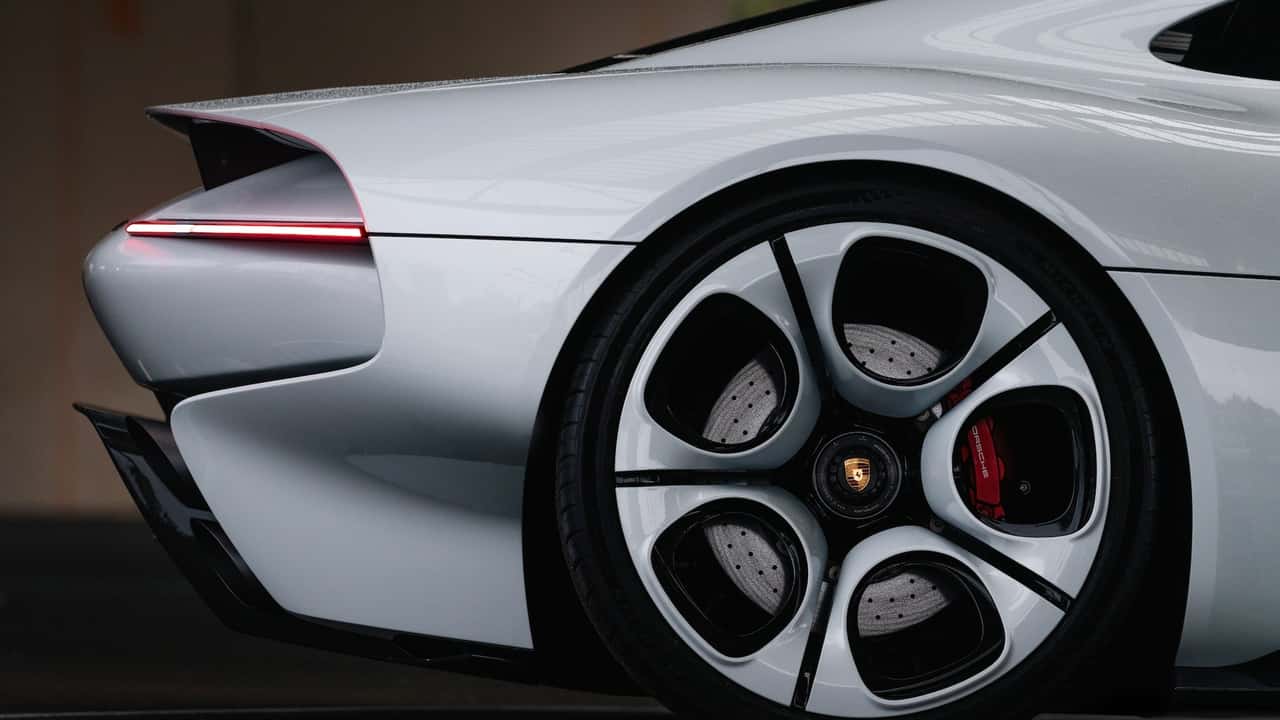
From $800,000 Carrera GT rebuilds to bespoke cars costing well into eight figures, Porsche is going all-in on exclusivity.
Porsche wants to lower its break-even point to fewer than 200,000 vehicles a year, and that obviously doesn’t mean flooding the market with entry-level Macans. Instead, the German automaker is looking further upmarket, where highly customized cars, exclusive one-offs, and six-figure restoration projects can generate serious money without chasing volume.
The strategy is part of Porsche’s broader effort to restore profitability after a difficult period marked by declining earnings, tariffs, fierce competition in China, and costly electrification decisions. Rather than simply selling more cars, it wants to make more money from each one, particularly at the top of its range.
That means giving wealthy customers more opportunities to commission something nobody else can buy. Porsche’s Sonderwunsch division is currently working on 15 one-off projects, with prices ranging from just under $2 million to approximately $15 million, according to Alexander Fabig, Vice President of Individualization and Classic, in an interview with Automotive News.
Porsche 911 GT2 Flachbau RS
Porsche 911 GT2 Flachbau RS
Porsche’s Sonderwunsch program takes customization far beyond choosing an unusual paint color or ticking every box on the options list. Customers can commission bespoke vehicles that require new components and extensive development work, turning an already exclusive sports car into a genuinely unique creation.
Porsche also sees potential in so-called “few-off” models. These would sit between conventional limited editions and fully bespoke one-offs, giving the company another way to charge a substantial premium for vehicles produced in very small numbers.
The ambitions extend beyond customization alone. Porsche is exploring ways to increase the profitability of its high-performance models, with future range-toppers potentially costing more than 200 percent above the entry-level 911. In other words, a sufficiently exclusive sports car could cost more than three times the cheapest 911.
Porsche is also finding lucrative opportunities in cars it built decades ago. Its factory recommissioning program lets Carrera GT owners have their V10 supercars restored to factory-fresh mechanical condition, with specialists who know the cars inside and out doing the work.
Customers will pay a fortune for the privilege. Fabig says these cost about $500,000 to $800,000 per car, excluding the vehicle’s price. So far, Porsche has completed 11 recommissions, with 16 more cars in progress and 21 waiting in line. That’s 48 Carrera GTs in total, completed, in progress, or awaiting their turn.
Porsche built just 1,270 Carrera GTs between 2003 and 2006, making the program’s scale particularly noteworthy. The 48 cars already completed or lined up represent almost four percent of total production, while the 11 finished examples alone account for a meaningful slice of the relatively small fleet.
The work can go well beyond a conventional restoration. Porsche can dismantle the car, overhaul its mechanical components, and return it to a condition that effectively gives the supercar a second life. Owners can also request personalized exterior and interior changes, creating a car that combines factory-backed restoration with individual touches.
One particularly striking example involved a Carrera GT transformed with a livery inspired by the No. 23 Porsche 917 that won the 1970 24 Hours of Le Mans. The car’s owner also requested bespoke interior details, illustrating how recommissioning can blend heritage with modern craftsmanship. Oh, and the odometer has been reset to zero miles.
For Porsche, this business offers an attractive proposition: generating substantial revenue from an existing product without developing an entirely new model. For owners, it offers a chance to preserve one of the brand’s most celebrated modern supercars with direct factory involvement.
Porsche is effectively betting that its wealthiest customers will continue paying extraordinary sums for something they cannot get from another automaker’s configurator. A $15 million one-off and a Carrera GT restoration costing up to $800,000 won’t replace the Macan as a volume seller, but they don’t have to. They need to generate enough profit to make each project worth the effort.
For a company trying to break even below 200,000 annual deliveries, that’s a different way of doing business. Porsche isn’t abandoning its mainstream models; it’s trying to make sure it doesn’t need to sell quite so many of them to remain profitable. And if that means spending years building 15 unique cars for customers with exceptionally deep pockets, Stuttgart is more than happy to oblige.
More From Porsche:
Source:
We want your opinion!
What would you like to see on Motor1.com?
– The Motor1.com Team