‘My Honda civic WAS BADDDD and they took it.’
A dealership was purportedly bamboozled by a customer’s trade-in, but folks online are unsympathetic.
Car seller and TikTok user Mike (@keyswithmike) shared footage of their manager realizing that the ride one of his employees took may not have been a smart investment.
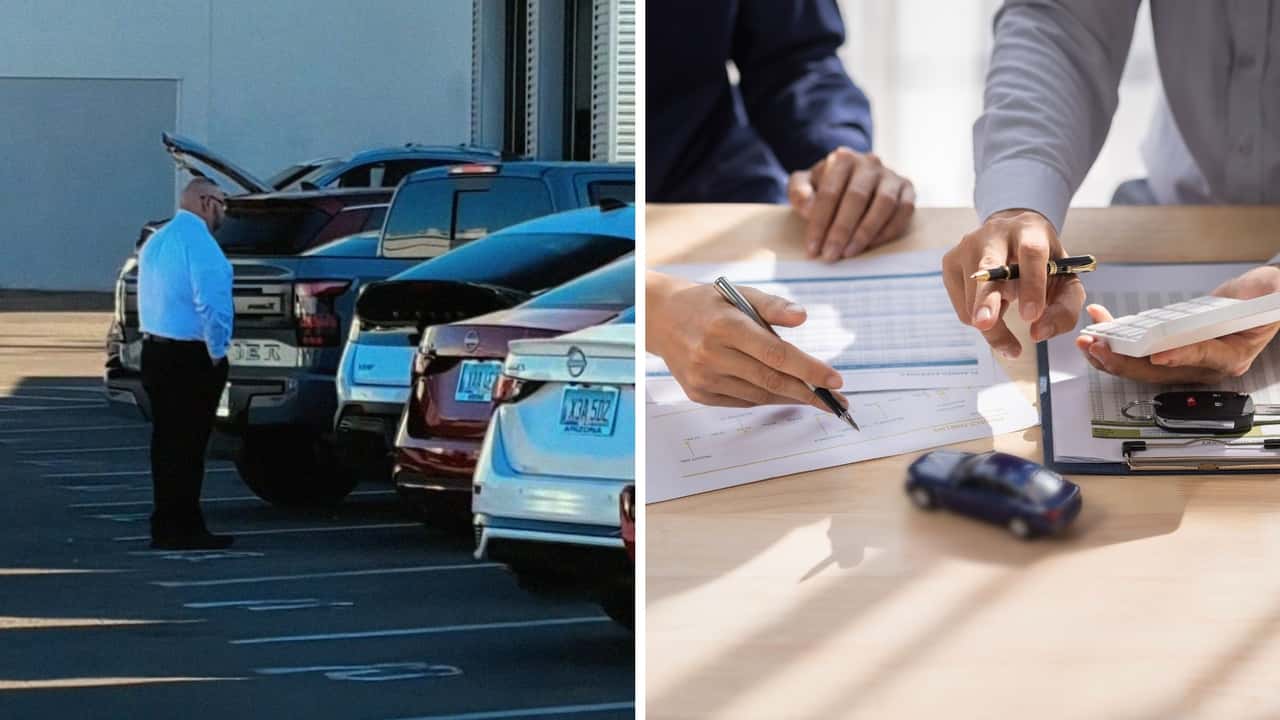
The video begins with a group of dealership workers standing outside on the lot. In the distance stands a man with a light blue long-sleeve shirt. They’re intently staring at a vehicle, unmoving. While this happens, text emblazoned over the video explains what’s happening: “My manager looking at the wack [expletive] trade someone took in.” It appears that whoever brought the ride in ended up getting a raw deal from a customer.
And it turns out there were plenty of people who admitted to doing the same thing with their own vehicle trade-ins at car dealerships. Throngs of folks who replied to Kuma’s video highlighted how they kept issues with their cars hidden at the time of trade-in so that they could maximize the amount of money they’d receive for their car.
“Finished all the paperwork, salesman said, ‘You didn’t tell me it had a check engine light.’ I said, ‘you didn’t ask,’” one viewer wrote.
Someone else shared how fortune intervened on the day they decided to hand their car over to a dealership. “I traded in a car because the transmission was going out. It would overheat and stop going completely. But I knew it could make it to the closest dealership without overheating if I did it first thing in the morning before it got hot out. So guess what I did?” they wrote.
And another person said in a similar anecdote that they capitalized on a dashboard that became suddenly free of error lights. “Hit a bump on the way to trade in my Dodge with a failing transmission. And the check engine light conveniently turned off. Got full value,” they stated.
There were others, however, who stated that had the trade gone the other way, then the dealership wouldn’t exactly be complaining.
“Then there’s my car sales man who probably got promoted to CEO for taking my 2014 fully loaded Toyota Camry trade in for $4,000 then them reselling it a week later for $18,000,” one remarked.
There was another person who replied to Mike’s video who shared a bit of advice they were told by a car seller. “Off the record- when my car started having engine issues. I reached out to my friend who worked for a different local dealer and asked her what I should do… she told me to clear the codes and immediately take it into a dealer and trade it in before anything got worse,” they wrote.
Folks on this Bob is the Oil Guy forum post discussed the ethics of not disclosing all potential defects on a vehicle prior to trading it in. One person said that they have zero qualms with it and explained why.
“Never seen or heard of one telling a potential customer about weaknesses or issues with a new or used car,” they explained. Additionally, they mentioned that they had doubts a dealership would even fix the vehicle that was being traded in even if they were appraised of the damage.
Another person, who said that they work at a dealership, advised against letting any salespeople know of issues with a car. “I take trade-ins at a dealership. Some customers want to tell you about issues. I wouldn’t,” they recommended.
Someone else said that it’s a dealership’s job to adequately assess the value of a car. Furthermore, they penned that “there is plenty of room between wholesale trade in (the price you get while trading in) and the retail price to repair things the dealer may not catch.”
Other drivers in this Quora post wondered about how much a buyer has to disclose about their car when trading it in. One person wrote that, generally, consumers “are legally required to disclose very little.”
Legal Clarity also offered up some guidelines as to what buyers are legally obligated to honestly disclose when trading in a vehicle. Chief among them are odometer readings: If these have been misrepresented, you may be subject to civil liability. Moreover, the article indicates that each state carries its own set of rules for vehicle trade-ins. Typically, qualifiers such as accurately reporting the status of the vehicle, i.e., if it is a salvage title or not, are imperative.
Other factors, such as flood or major damage, should be made known to the buyer, even if it is a trade-in.
On the flip side, however, if the dealership missed any damage during its inspection and handed an official bill of sale for the trade-in, this can ultimately be murky territory. Something such as a check engine light or faulty transmission, if not caught prior to the trade-in, could end up becoming a game of proving the damage to the car was there before the dealership signed off on the trade-in. Be sure to read any agreements regarding the trade-in of your vehicle prior to signing off and handing over the keys.
Motor1 has reached out to Mike via TikTok comment for further information. We will update this story if he responds.
We want your opinion!
What would you like to see on Motor1.com?
– The Motor1.com Team