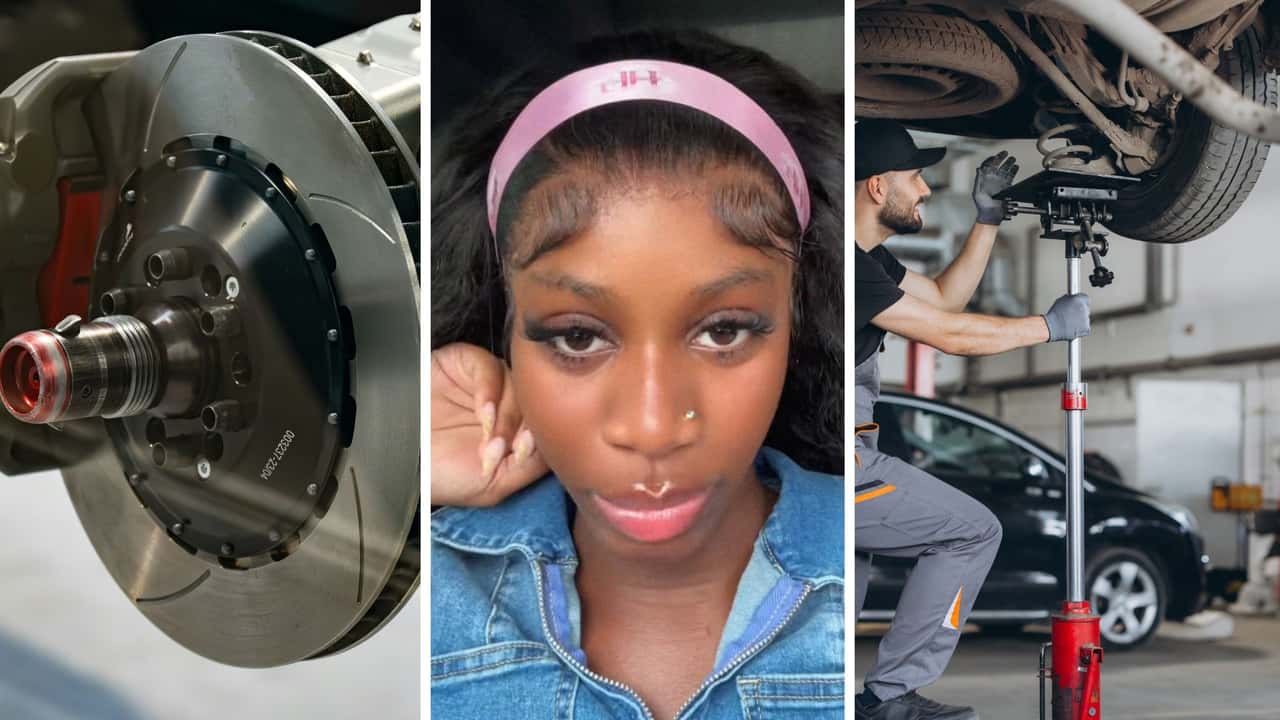
“Even though we did a terrible job with your brakes…”
In an ideal world, you can take people at their word. But that’s not the reality we live in, which is why contracts exist.
One woman says she learned that lesson the hard way.
She says that a dealership promised to fix something on her car after she purchased it, but there was never a written agreement stating as much. Now she claims they’re giving her the runaround. She says she’s spent months trying to get in touch with dealership leadership. Now she’s warning others.
In a video with more than 5,000 views, content creator @brownskinndiva says she purchased a car from Florida Fine Cars in Miami, and before the sale was complete an employee acknowledged a minor problem involving the brakes and rotors and told her to bring the vehicle back so the dealership could address it.
She went back a week or two later and they allegedly fixed the issue. But about two months after that, she says she took the car elsewhere to get new tires and the mechanic noticed something was off.
“Whoever doing this to your rotors, don’t let them touch your car no more,” she recalls him saying.
He told her the rotors were being shaved down in a way that could contribute to an accident and that the dealership had not repaired the brakes as promised. He also told her the brake fluid was never flushed.
When she raised the issue with Florida Fine Cars, they told her she purchased the vehicle “as is.” That didn’t sit right with @brownskinndiva, who claims an employee explicitly promised to fix the brakes after the sale.
“Basically, their excuse is, even though we did a terrible job with your brakes, you bought the car as is,” she says.
@brownskinndiva says the check engine light came on within roughly 90 days of the purchase, apparently pointing to a problem with the mass airflow sensor. She purportedly brought the car back to the dealership, and it fixed the issue, only for the light to come back on about a month later.
That’s when she learned that diagnostic codes can be cleared without fixing the underlying problem.
To add to the issues, @brownskinndiva says she was in two car accidents where she was hit by the other driver and Florida Fine Cars used those incidents to deflect what she is convinced was their wrongdoing. @brownskinndiva maintains that the problems she reported began earlier and were unrelated to the crash.
The dealership noted that her warranty covered most of the repairs, a warranty she says she paid cash for.
@brownskinndiva says the car is still making noises, stalling and even shutting off in intersections or in front of other cars. She says she reported those potentially dangerous issues by phone and email.
“It was a lot of issues that was going on that was very hazardous and I explained this to them receptionist. Every time I call the receptionist he’s like, ‘Oh well I can’t help you you gotta call this that third,’” she says.
@brownskinndiva says she spent about seven months trying to reach a manager, but her calls were ignored or blindly transferred, and employees repeatedly told her the manager was unavailable. At one point, she says she called from a different number and finally received an answer.
She also contacted other Florida Fine Cars locations in search of a general manager, human resources representative or anyone else who could intervene. Those locations allegedly directed her back to the Miami dealership. One person was initially communicating with her, but she say they then stopped responding.
Once they did take in her car, she claims she was told the location had only one mechanic, so she’d have to be without her car for about a week just to receive a diagnosis—then wait potentially another week or two for the repair.
On one occasion, she says the dealership kept the car for three or four weeks. She estimates she spent nearly $1,000 on transportation during that period, only to get the vehicle back with the same problems.
@brownskinndiva eventually left a public review that she says finally prompted a call and a written response from the dealership disputing her version of events.
Eventually, she took the car to a service center that specializes in European and luxury vehicles. The creator says they told her the car had the wrong battery, which prevented the shop from getting accurate diagnostic codes. That left her wondering how Florida Fine Cars had diagnosed multiple problems and replaced several major parts.
When she later returned for a full service and oil change, the mechanic reportedly identified one specific (unnamed) issue that he believed was responsible for the car’s problems.
Now she wants to know what options she has after months of calls, repairs and repeat problems.
“Do anybody have any advice or any recommendations on what y’all think I could do or what’s going on?” she asks.
Generally, an “as is” sale means the dealership is providing no warranty of its own. The buyer accepts the car in its current condition and is responsible for repairs that come up after the purchase, Autotrader explains. It notes that if a major component fails immediately after the sale, the dealer typically does not have to repair the vehicle or take it back.
Federal rules require dealers to display a buyers guide stating whether a used vehicle is being sold “as is” or with a warranty. That information should also appear in the sales contract.
State laws can create exceptions, and some states restrict “as is” sales or preserve certain warranties. A dealership may also offer additional assurances despite selling the vehicle as is. TrueCar recommends getting every promise in writing before signing, because a verbal offer to repair something can be much harder to prove later.
An “as is” designation also does not necessarily mean the car lacks all coverage. A remaining factory warranty, separately purchased service contract or limited dealership warranty may still cover certain repairs.
Experts recommend having an independent mechanic inspect a used vehicle before purchase. A history report can reveal reported accidents, ownership changes or title problems, but a mechanic can find things that aren’t on the report.
“Shaving” a brake rotor is another way of describing resurfacing. A machine removes a thin layer of metal from the rotor’s contact surface, making it flat and uniform again, AutoZone, explains. Resurfacing can help correct uneven wear, grooves, corrosion or thickness variation that causes shaking and vibration while braking. It can also provide new brake pads with a smoother surface to grip.
But a rotor cannot be shaved indefinitely, as each one has a minimum-thickness specification. A technician should measure the rotor with a micrometer and confirm that it will remain above that limit after machining.
If the rotor is already too thin, or would become too thin after resurfacing, it should be replaced. Heavy rust, deep grooves or excessive runout can also make replacement the better option. And resurfacing is not automatically required every time pads are changed: AutoZone says rotors that remain flat, smooth and free of braking vibrations may be left alone.
In comments, people alleged that the dealership has a reputation that precedes it.
“Florida Fine Cars been terrible since I been in high school,” one person wrote.
“There is lawyers, it’s the lemon law,” another said.
“I agree I’ve only heard horror stories from customers that bought from there,” a third wrote.
Motor1 reached out to @brownskinndiva via TikTok direct message and comment and to Florida Fine Cars via email and phone message for comment. We’ll be sure to update this if either responds.
We want your opinion!
What would you like to see on Motor1.com?
– The Motor1.com Team